WA
RESEARCH ADVISOR
Waseem Abu-Ashour, PharmD, PhD
PHARMD, PHD · CLINICAL RESEARCH · AI & DIGITAL HEALTH
Research leadership at McGill. AI implementation across pediatric and adult care systems.
SEE EXPERTISE →The practice environment clinical teams don't have — and can't afford to go without. Structured simulation, real-time insight, measurable readiness.

Communication skill measured in the moment — pacing, presence, and response quality.
Communication skill measured in the moment — pacing, presence, and response quality.
Poor clinical communication doesn't stay inside the training gap. It surfaces as adverse events, malpractice claims, clinician burnout, and patients who never fully understood what was happening to them.
ROOT CAUSE
Communication breakdown is cited as the leading root cause of sentinel events — above equipment failure, clinical judgment, and procedural error.
The Joint Commission · Annual Sentinel Event Data
OF CLINICIANS
Report burnout. Under-preparedness for emotionally demanding encounters — not workload alone — is consistently identified as a primary driver.
Medscape Physician Burnout Report · 2024
IN MALPRACTICE
Attributed to communication failures over five years — concentrated in the exact moments that get skipped in training: diagnosis delivery, informed consent, end-of-life conversations.
CRICO Strategies · Candello Malpractice Analysis
HOURS OF TRAINING
The average clinician receives fewer than ten hours of formal communication skills training — across years of education — before facing those conversations in practice.
Medical Education Literature · ACGME & AAMC Program Data
THE OLD WAY
THE COST
One-day off-site workshop
$1,500–$2,000 per person when you factor in fees, backfill, and lost billable hours. Forgotten within 90 days.
Wang et al., 2013 · Individual and Team Skill Decay ↗Role-play with a colleague
Breaks character. Gives no feedback. Doesn't scale beyond whoever is in the room.
LMS module
Teaches the protocol. Doesn't rehearse the person. No pressure, no reps, no retention.
Supervised observation
Bottlenecked by supervisor availability. Inconsistent. One practitioner at a time.
Static. One session. One persona. No repetition. There is no practice room.
empathium is different by design. Repeat the scenario. Rotate the persona. Raise the stakes. Learning that scales with your practice.
When the clinical reality shifts — a change in enforcement climate, a policy reversal, a community in crisis — your training needs to reflect it. Legacy LMS updates content on a cycle. empathium updates the patient in real time.
Same scenario. Same skill. A person in the room who reflects what your staff will actually face on Monday.
Static training prepares people for last year's conversations.
Three steps to build the communication skills that shape patient outcomes, family wellbeing, and student futures.
Choose a scenario that fits your practice — or create your own. Breaking difficult news, navigating family dynamics, supporting someone in crisis, or any conversation that shapes lives.
Engage in realistic dialogue with our AI. It responds like a real patient, family member, or client — with grief, fear, resistance, or hope. Practice your way: voice or text.
I just want to know what we're actually fighting for here, doc…
That's a fair question. What matters most to you right now?
Honestly? I don't want my kids making decisions I never got to make.
Review your sessions, identify communication patterns, and measure growth in clinical communication skills with detailed analytics and insights over time.
You brought genuine warmth to this conversation — Darren opened up more than he might have with someone less attuned.
The conversations that shape lives happen across healthcare, social services, and education. empathium flexes to the work — because the gap between training and readiness is the same regardless of setting.
CLINICAL & BEHAVIORAL HEALTH
Disclosing a diagnosis. Supporting someone in crisis. Navigating end-of-life. These are not soft skills — they are clinical competencies with measurable impact on patient experience, retention, and outcomes. empathium gives clinical teams a place to build that readiness before it's needed.
SOCIAL SERVICES & WORKFORCE
Frontline staff, case managers, coaches, and youth-serving teams meet high-stakes human moments without formal clinical training. empathium scales structured practice across large, dispersed workforces — so every person gets reps, not just the most experienced person in the room.
HIGHER EDUCATION
MSW, nursing, and medical programs need supervised practice that scales beyond clinical placements. empathium gives students structured, progressive simulation with reflection built in — so they enter the field having already had the conversation.
Educators, clinicians, and practitioners who saw the gap first — and recognized what structured practice could change.
Realistic practice without the pressure of getting it wrong in real life. I can build skills before I'm in the field — and use it to reflect on how I respond to different emotions.
empathium is built by a founder who trained clinicians, shaped by physicians who ran the systems, researchers who understand what works, and governance leaders who set the standards. Their collective judgment — and the evidence they have produced — is what the platform inherits.
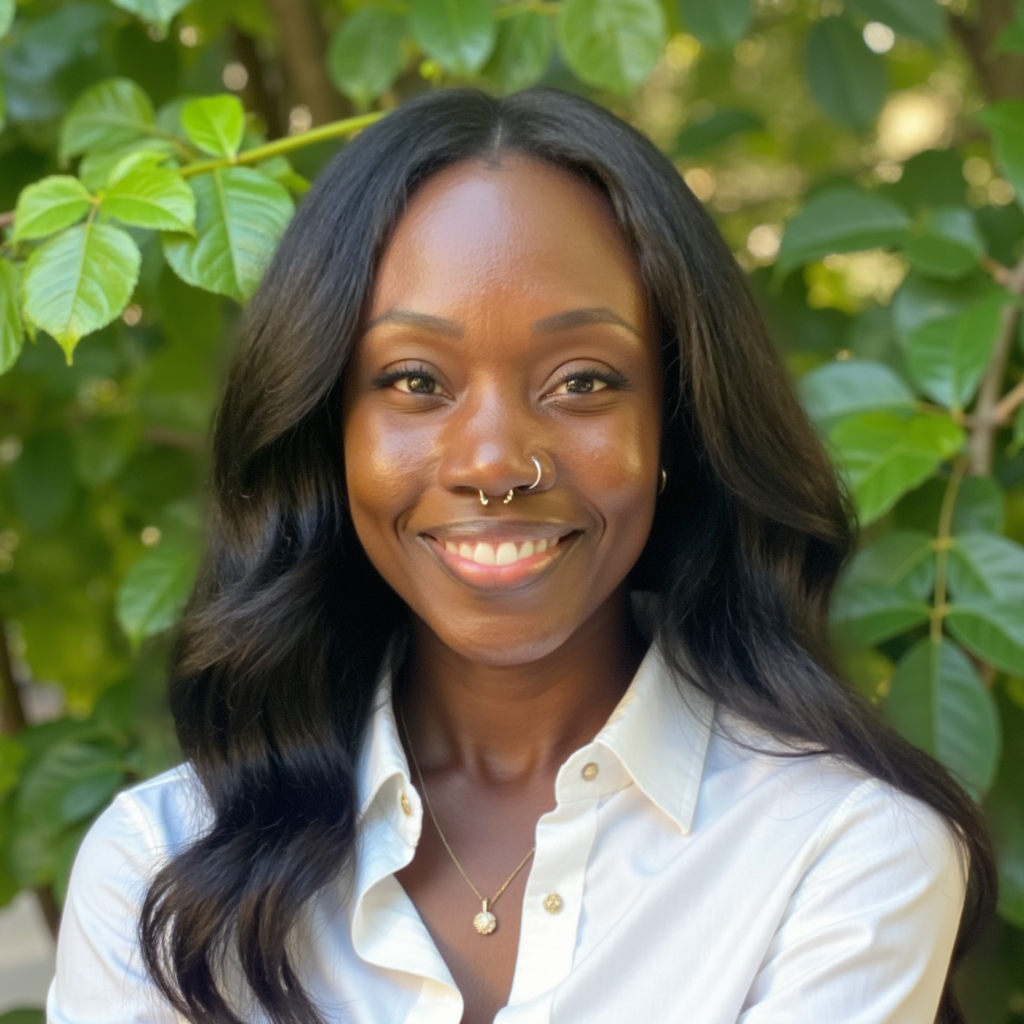
Trauma therapist with extensive experience treating complex PTSD; decade+ in trauma-informed clinical practice and care coordination. Former Field Education Director — built MSW clinical training for 600+ students across 300+ agencies.
LINKEDINempathium's advisory network isn't decorative. These are the physicians who ran the systems, the researchers who understand what works, and the governance leaders who set the standards — now applying that same standard to how AI simulation gets built and deployed.
PHARMD, PHD · CLINICAL RESEARCH · AI & DIGITAL HEALTH
Research leadership at McGill. AI implementation across pediatric and adult care systems.
SEE EXPERTISE →MD, MPH, MBA · CLINICAL & HEALTH SYSTEM LEADERSHIP
Physician leader. Public health and health-systems lens. Advising on clinical fidelity at scale.
SEE EXPERTISE →MD · FEDERAL HEALTH RESEARCH GOVERNANCE
Former Director of OHRP. Oversight spanning 110 hospitals and national human-subjects protection infrastructure.
SEE EXPERTISE →QI/IS · APPLIED EPIDEMIOLOGY · CULTURAL RIGOR · REPRODUCTIVE JUSTICE
Chief Black Feminist Physician Scientist. Developer of the PREM-OB Scale®. Principal investigator, SACKRED Birth.
SEE EXPERTISE →INSTITUTIONS REPRESENTED
Explore how this network connects across clinical practice, research, governance, and AI — interactively below →
SAGE sees the session the way a senior clinician would — what you said, what you didn't say, and what the pattern means across time.
Not a grade. A read.
SAGE doesn't wait for your next question. She gathers signal across the session and surfaces what you might miss — patterns, pauses, and turns worth replaying.
Professional skill and personal awareness, together. SAGE helps you see not only what to do differently, but who you are when you're doing it.
One companion across the full arc — framing before, nudges in the moment, and structured reflection after. Never alone in the hard conversation.
Patterns from prior sessions
Every feature is designed around one question: what does it actually take to build clinical communication skill — reliably, at scale?
Scenarios are built around the communication competencies that actually shape outcomes — developed with practicing clinicians across healthcare, behavioral health, and social services. Practice isn't just realistic. It's measurable.
AI personas hold their emotional state across the full conversation — grief, resistance, confusion, hope — without losing character. Practice the rupture, not just the opener.
Structured, session-by-session feedback on tone, word choice, and communication skill — delivered immediately, without requiring a supervisor to personally observe every rep.
Leaders see readiness by practitioner, by scenario, and by competency domain — so supervision time goes toward the people and moments that actually need it.
Run the same scenario with a different persona, emotional register, or complication. Skill gets built through variation — not a single pass at a curated moment.
Competency metrics — empathy, de-escalation, boundary-setting, risk response — tracked over time so growth is documented, not assumed.
empathium is one practice layer. The personas, scenarios, and rubrics flex to the work — because the conversation is always the work.
Disclosing a diagnosis. End-of-life. Risk screening. Clinicians carry these moments — often without rehearsal. empathium gives medical and behavioral health teams a place to practice the conversations that drive patient experience and clinician retention.
Frontline teams, mentors, case managers, and youth-serving staff meet high-stakes human moments without formal clinical training. empathium scales practice across volunteer and staff networks so every person gets reps—not just the most experienced person in the room.
MSW, nursing, and medical programs need supervised practice that scales beyond clinical placements. empathium gives students structured, progressive practice with reflection points — so they enter the field already having had the conversation.
Rehearsal targets five compounding drivers of burnout — each one measurable, each one addressable before the live encounter.
Built with practicing clinicians across healthcare, behavioral health, and social services — and grounded in how communication skill is actually learned and retained.
AI that understands nuance, tracks growth patterns, and guides development with precision.
Clear metrics across empathy, de-escalation, boundaries, and risk-handling — so readiness becomes visible.
The advisors and core team above map to nine competency domains. Select a node to see who contributes where — across healthcare training, implementation, governance, research, public health, and workforce transformation.
SELECT A COMPETENCY TO EXPLORE THE PEOPLE BEHIND IT →
Most organizations already pay for communication gaps — in supervisor time, practitioner overwhelm, delayed feedback, rework, turnover risk, and inconsistent care. empathium makes that cost visible, then gives teams a faster way to reduce it.
With simulation-based practice, practitioners can rehearse high-stakes conversations before they happen, receive structured feedback immediately, and build readiness without adding more burden to supervisors. Leaders get a clearer signal of who needs support, where patterns are emerging, and how much capacity can be retained across the organization.
Use the model below to estimate the hours — and loaded labor value — your team could keep in the system each year.
Simulation-based learning gives teams a safe, repeatable way to build judgment before the stakes are real. Instead of relying only on one-time training, delayed feedback, or inconsistent observation, empathium gives every learner structured practice and every leader a clearer signal of where support is needed.
PRACTICE BEFORE PRESSURE
Rehearse complex conversations before they become live patient, client, or family moments.
FEEDBACK WITHOUT BOTTLENECKS
Learners receive structured guidance without requiring a supervisor to personally observe every rep.
READINESS LEADERS CAN SEE
Supervisors triage by signal, not guesswork — focusing attention where it matters most.
Most organizations already pay for communication gaps — in supervisor time, practitioner overwhelm, and turnover risk. Adjust the inputs below to see what your team is leaving on the table.
YOUR TEAM · ILLUSTRATIVE
Illustrative model only. Actual impact varies by organization size, loaded labor rates, supervision structure, and downstream effects including turnover, documentation burden, and care quality. Final assumptions are calibrated with your clinical, operational, and finance leads during the demo.
SUPERVISION
SUPERVISORS
10supervisors
HRS SAVED / SUPERVISOR / WK
7hrs / wk
PRACTITIONERS
PRACTITIONERS
workers / clinicians
40practitioners
HRS SAVED / PRACTITIONER / WK
4hrs / wk
Loaded rates illustrative at $140/hr supervisor · $85/hr practitioner.
SUPERVISOR TIME RETAINED
Hours supervisors can redirect from manual review, repeated coaching cycles, and avoidable triage.
3,360 HRS
$470,400 / yr
PRACTITIONER TIME RETAINED
Hours practitioners can redirect from inefficient preparation, rework, and preventable communication breakdowns.
7,680 HRS
$652,800 / yr
TOTAL ANNUAL CAPACITY RETAINED
Estimated hours and loaded labor value your organization keeps in the system.
11,040 HRS
$1,123,200 / yr
CAPACITY RETAINED BY TEAM SIZE
Illustrative presets based on combined supervisor and practitioner time retained.
Final numbers are calibrated with your clinical, operational, and finance leads on the demo call.
Build your capacity model.
Every organization carries a different mix of supervision load, practitioner workflow, documentation burden, and communication risk. We'll help you model where empathium can retain time across your team.
empathium is not a generic AI training tool you configure yourself. It's a partnership — designed for organizations that want clinical simulation grounded in their own standards, delivered at the scale their team actually needs.
YOUR CLINICAL STANDARDS
Bring your protocols, frameworks, and care guidelines. We embed them directly into the simulation — so every scenario reflects the standard your organization is already accountable to.
OUR PLATFORM & PERSONAS
We build and maintain the AI infrastructure, the persona library, and the delivery layer. You get simulation that holds up — without engineering, model management, or content production overhead.
MEASUREMENT YOU CAN USE
Session data, competency metrics, and readiness signals — structured so they're useful to clinical leaders, training directors, and supervisors, not just a dashboard no one checks.
CLINICAL EXCELLENCE · AT SCALE
From something professionals earn through stressful exposure — to something your organization can support, measure, and scale.